This is an archived article containing highly controversial and racially charged claims. Reader discretion is advised. This is an article archived from ZH. The archivist does not endorse or reject the propositions presented in the article, nor has the archivist attempted to verify the factual accuracy of its content.
Abstract
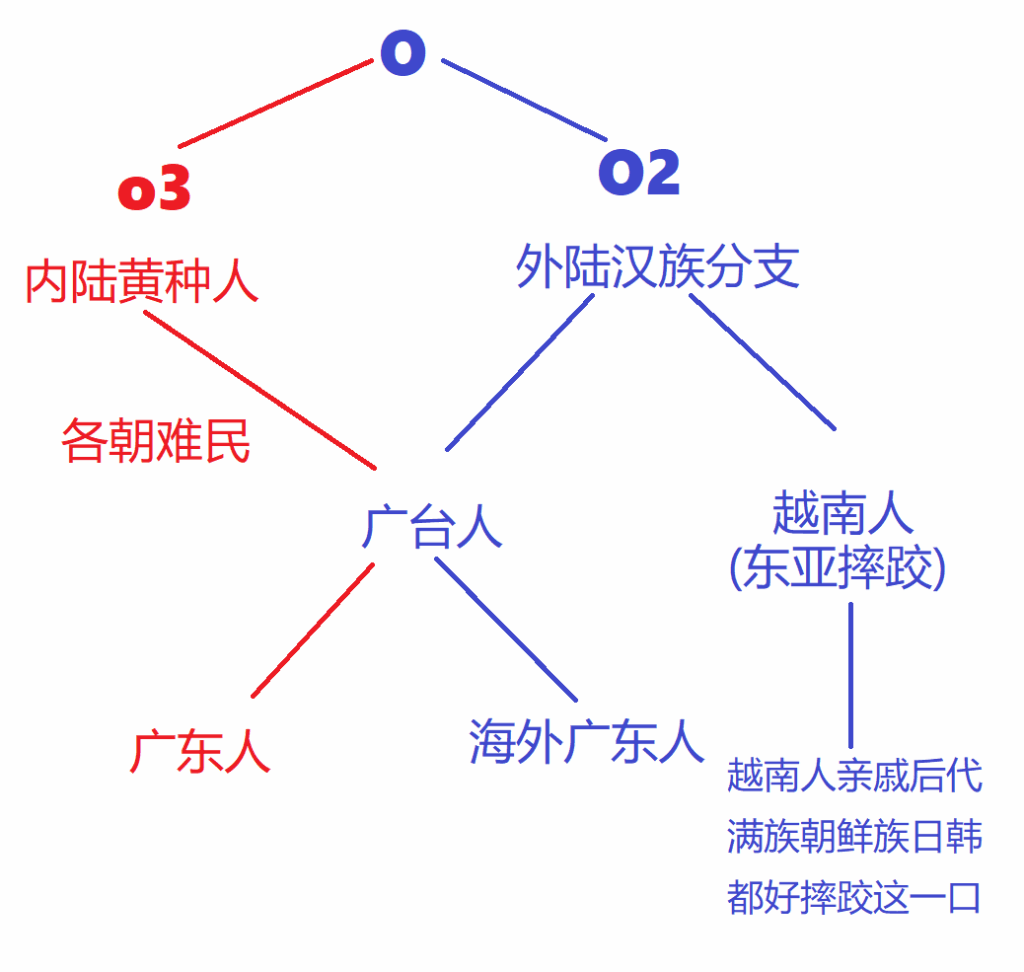
The article attempts to answer the question: “Why do Northern Chinese look so different from Koreans and Japanese despite being geographically close (Northerners tend to have narrow, long faces while Koreans and Japanese tend to have wider, rounder faces)?”It proposes that the main reason lies in the difference between the inner circle (inland Northern Chinese) and the outer circle (ocean rim/coastal groups).
The author claims that Koreans and Japanese belong to the outer circle O2 lineage (originating from Southern Chinese/Guangdong-Vietnam), characterized by rounder/wider faces. In contrast, Northern Chinese (mainly O3) are said to have mixed with “black African” elements, resulting in narrower and longer faces. The article includes pictures to demonstrate these facial differences.
Using the Dragon Boat Festival (Duanwu) as evidence, the piece highlights major differences in customs and naming between Vietnam/Korea and China, arguing that the outer circle (Southern Chinese, Vietnamese, Koreans, Japanese) shares a common O2 cultural and genetic foundation, while the inland inner circle has diverged significantly. The author also suggests that South Korea was founded and is still influenced by this outer-circle O2 bloodline.
The core thesis is that geographical proximity between Northern Chinese and Koreans/Japanese is misleading, as their physical appearance differs due to distinct ancestral mixes — particularly the supposed African influence on Northern long faces versus the “original” round-faced O2 of the ocean rim groups.
Original Article
北方人和日本人唯一区别就是没有原来的O2。
日本的O2是韩国过去的,而韩国原生的O2是越南/广台传上去的。
举个例,
越南和韩国都有端午节,
但越南和韩国的端午节根本不划龙舟,也不吃粽子,更不要提什么屈原,
越南对端午节叫 Đoan Ngọ而韩国叫Dano (단오)
发音9成接近,
而中国的端午节和他们发音完全不相似,大概相似度4成(BY AI 结论)
就算粤语虽然比普通话更接近Đoan Ngọ和Dano (단오),
但也只有五成而已,也就是中国的端午节压根和越南或韩国的端午节是两回事,
或者中国端午节完全是于另外一种文明的产物的衍生物,
我列一下韩国和越南和中国端午节区别,
虽然O2和O3都是广东上去的,
那么既然北方人喜欢说O3正宗那么我们就把O2说是百越吧,
其实O2和O3都是百越,
当然上面端午节的异常有另外一个解释就是,
真的是越南带上去Literally,
根据国外的权威的最高票数第一答案,说的就是
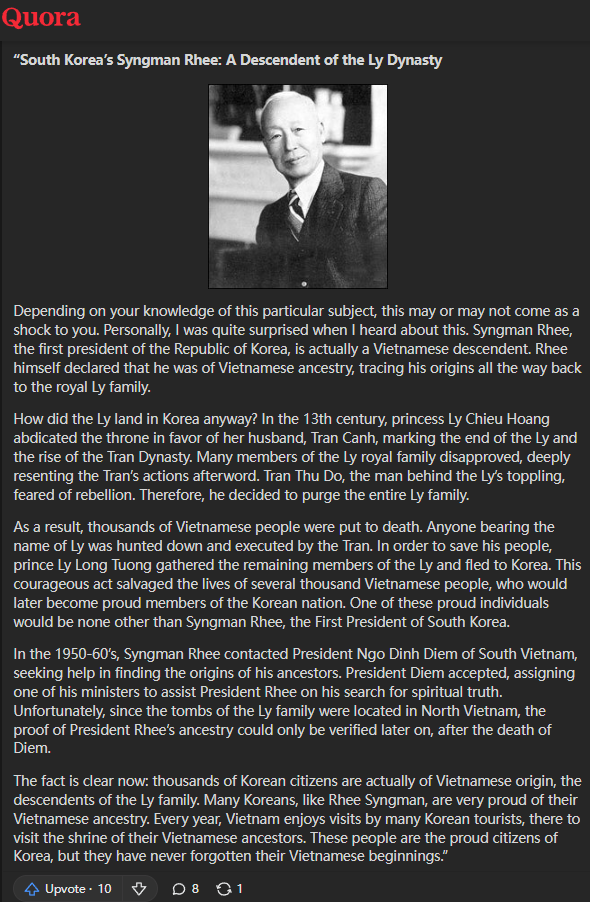
In 1955, Rhee Syngman came to South Vietnam, announcing that his ancestors came from Vietnam, wanting to visit his royal family’s cemetery (in Bac Ninh province, North Vietnam). Due to the new Vietnam split, it was not possible for him to do so. Historical records show that he is the 11th generation of Ly Long Tuong, a Vietnamese royal navy general fleeing Vietnam when the Trần Dynasty took over the Lý dynasty, in fear of being purged. In Korea, the surname Lý is transcripted into English as Lee or Rhee.
1955年,李承晚来到南越,声称自己的祖先来自越南,并希望前往(位于北越北宁省的)王室家族墓地祭拜。但由于当时越南刚分裂不久,他未能如愿。历史记载显示,他是李龙祥的第11代后人。李龙祥原是越南皇家海军将领,在陈朝取代李朝时,因担心遭到清洗而逃离越南。在韩国,李姓的英文转写通常为 Lee 或 Rhee。
This is an archived article containing highly controversial and racially charged claims. Reader discretion is advised. This is an article archived from ZH. The piece was originally published on ZH approximately five years ago. The archivist does not endorse or reject the propositions presented in the article, nor has the archivist attempted to verify the factual accuracy of its content.
Abstract
The article argues that Northern Asians (北亚人) occupy a lower societal and historical position primarily due to their physical characteristics and cognitive traits, which the author claims are mismatched with cold climates. It portrays Northern Asians as having “typical African” body types — such as high metabolism, difficulty gaining fat, and long legs — making them ill-suited for Siberia or harsh northern environments.
The piece claims these groups were originally from tropical or temperate zones and were pushed northward by more advanced Southern Chinese populations (referred to as 广台人 or pure Han). It extends this into broader racial theories, suggesting Northern Asian bloodlines carry “African ancestry” and that physical traits like high metabolism and limited capacity for prolonged mental focus are biologically determined and linked to social outcomes, class, and historical success.
The article further discusses supposed differences in endocrine levels, brain heat generation during thinking, and metabolic efficiency between racial groups, attributing these to evolutionary pressures after leaving Africa. It includes an account of an American researcher whose controversial findings on metabolism, IQ, race, and social status were allegedly suppressed. The text uses these ideas to explain regional disparities in China and contrasts groups such as South vs North in modern contexts.
The overall proposition frames physical anthropology, metabolism, and supposed racial biology as key explanations for historical migrations, economic patterns, and social hierarchies in East Asia.
This article develops, through Gt-Theory, a formal interpretation of the Liu Zhongjing Theorem (刘仲敬定理), which may be read as a Hobbesian account of social interaction in Chinese society under conditions of collapsed trust. Drawing on probability theory, topology, information theory, and evolutionary game theory, it examines how the erosion of reliable social recognition can generate generalized distrust. The analysis begins by modeling phenotypic signals as probability distributions in a high-dimensional trait space and proposing a topological reorganization that recovers structured divergence from dispersed variance. It then introduces a rupture hypothesis to explain major discontinuities between expected phylogenetic similarity and observed phenotypic differentiation. Finally, the paper formalizes the relationship between recognizability and cooperation in a repeated game: as the probability of recognition declines, the effective discount factor of repeated interaction approaches zero, causing cooperative equilibria to collapse into universal defection. The article argues that this transition provides a formal account of “mutual harm” as a low-information equilibrium of social life. The analysis thereby embeds macrohistorical narratives of decline within broader theoretical debates on recognition, cooperation, and the role of phenotypic perception in social explanation.
Introduction
刘仲敬, Liu Zhongjing (LZJ), a history PhD dropout from Wuhan University whose work relies on interpretation and broad macrohistorical pattern recognition, and the phenotype scholar Baidu_Genetics(百度遗传), whose analysis proceeds from a wholly different scientific paradigm, could scarcely be further apart in method. Yet they converged independently on the same chilling conclusion about East Asia’s terminal condition. Both identified the phenomenon now known as the Liu Zhongjing Theorem (刘仲敬定理).
From the perspective of the humanities, LZJ observed the macrohistorical eradication of spontaneous order and concluded that “China is the ash of civilization.” As he profoundly stated:
“今天所謂中國,無非像阿拉伯人的埃及一樣借用了古老光榮的名字。中國是文明耗盡以後的灰燼,能否構成新文明的原材料尚在未定之中。她是文明的輸入者,不是生產者。她目前沒有足夠的德性和能力誠實地學習,沒有表現出將來可能生產文明的任何跡像。至於現實政治意義上的崛起,那是一條自取滅亡的捷徑。” (Today’s so-called China has merely borrowed an ancient, glorious name, much like the Arab’s Egypt. China is the ash left behind after civilization has been exhausted, and whether it can form the raw material for a new civilization is still uncertain. She is an importer of civilization, not a producer. She currently lacks the virtue and ability to learn honestly, and has shown no sign of possibly producing civilization in the future. As for the rise in the sense of realpolitik, that is a shortcut to self-destruction.)
Meanwhile, Baidu_Genetics claimed to discern the same pattern at the level of phenotype. Where LZJ saw civilizational ash, Baidu_Genetics saw biological convergence: history functioning as a selective grinder that reduces a once diverse and high-potential population into an increasingly homogeneous remainder. In the formal vocabulary of Gt-Theory, this bleak conclusion was set out in the archival Reddit post 广台理论:The End of History 及其三条最后的防线, where the phenomenon is cast in stark essentialist terms as a struggle between humanity and HMS destined, in the author’s account, to bring history to its terminal point.
“汉人和黄种人在原神上有着本质的区别,s.s. 汉人属于人类范畴,而黄种人则不然。而根据历史终结论和黄种人的特性,黄种人将非常有可能最后赢得与人类斗争的胜利从而终结历史。” (Han people and the ‘yellow race’ [HMS/1st Gen Androids] have an essential difference in their fundamental phenotype/nature, s.s. Han people belong to the category of humanity, whereas the ‘yellow race’ does not. Furthermore, according to the End of History theory and the specific characteristics of this phenotype, they are highly likely to ultimately win the struggle against humanity, thereby bringing an end to history.)
Because LZJ, constrained by a humanities-based method, perceived only the institutional residue of decline, he left the future “uncertain” and thus preserved a residual possibility of recovery. Baidu_Genetics, by contrast, claimed to identify the deeper substrate of collapse: not merely institutional ash, but biological ash—a population structurally fated, in his account, toward failure and self-destruction. Accordingly, his conclusion is not conditional but terminal, amounting to a verdict issued by nature itself. This methodological difference underlies their divergence over the theory’s ultimate validity and finality.
Let us be clear at the outset: the LZJ Theorem is only Stage II of Gt-Theory. Stage I consists in discrimination by appearance, enabled by the existence of an attenuated first-generation android phenotype that functions as a visible sorting mechanism. Stage II, which is the focus of the present paper, is the Hobbesian equilibrium described by LZJ: once phenotypic depreciation undermines the reliability of visible distinction, the effective discount factor of repeated interaction approaches zero, and generalized mutual harm emerges as the equilibrium condition. Stage III follows from this same logic: once universal conflict has been stabilized, selection no longer favors merely overt aggression, but increasingly rewards strategic and adaptive aggression. The unifying hypothesis across all three stages is that phenotype first enables exclusion, then—through its depreciation—destroys recognizability, collapses the repeated game into a one-shot game, and ultimately produces a society structured by defection and higher-order predation.
刘仲敬定理:黄患的最佳策略是互害。
[互害 – mutual destruction/preemptive defection]
Liu Zhongjing Theorem: The only Nash Equilibrium, and hence the only viable action in the game of human interactions for the 1st Gen Androids, is to Fuck You Up .
Although both works claim to explain the same phenomenon, only one proceeds through a genuinely formal and scientifically reproducible method. The two proofs are methodologically non-overlapping. LZJ presented the theorem through verbal exposition and appeal to the historical record; Baidu_Genetics, by contrast, derives it through formal scientific methods, including biology, game theory, and algorithmic analysis. In view of priority, the phenomenon appropriately retains the title “LZJ Theorem.” The contribution offered here, however, is the core proof of Gt-Theory. Because it is developed through an independent and formal scientific framework rather than a predominantly historical one, its claims are stated with greater rigor, generalizability, and mathematical precision.
The Maths: Formalization of Gt-Theory
To rigorously prove the Liu Zhongjing Theorem, we must map the biological reality of the populations onto a formal topological state space governed by evolutionary game theory. This requires a two-part mathematical proof: first, establishing the topological necessity of phenotype recognition via reorganized frequency distributions; second, mapping the replicator dynamics of algorithmic asymmetry when that recognition collapses.
Phenotype Recognition
Before any game-theoretic interaction can occur, the respective behavioral algorithms must evaluate the physical reality of the counterpart. Let the evolutionary phylogenetic tree be defined as a directed acyclic graph \(\mathcal{G} = (V, E)\). Consider two populations branching off from the same ancestral node \(\mathcal{N}_0 \in V\). We define their phenotypic expression over a discrete, complete sample space of traits \(\Omega\), represented as a high-dimensional probability simplex \(\Delta^{|\Omega|-1}\).
Let \( x \in \Omega \) denote a specific point within a continuous, connected phenotypic sample space \(\Omega\).
We map the phenotypic distributions of the two sample spaces as continuous probability measures. Let \( b(x) \) be the probability density of phenotype \( x \) in sample space \( B \) (the divergence), and \( c(x) \) be the probability density of phenotype \( x \) in sample space \( C \) (the baseline).
By Kolmogorov’s axioms of probability, the integral of these densities across the entire sample space must equal unity for both:
This fundamental property \(\int_{\Omega} d(x) \, dx = 0\) mathematically dictates a profound structural necessity: if the populations are not identical, the continuous divergence function \( d(x) \) must alternate signs. By the Intermediate Value Theorem, there must mathematically exist transitional phenotypes \( x^* \) where \( d(x^*) = 0 \). These points serve as the lower-dimensional anchors of the system; because they represent zero difference, they echo the Hardy-Weinberg equilibrium state shared by the ancestral node \( N_0 \).
Reorganized Variance Hump
However, a scattered distribution of the divergence function \( d(x) \) obscures the true phylogenetic shift. To observe this shift clearly, we first project the variance from the lower-dimensional anchors (where \( d(x) = 0 \) marks the equal-frequency baseline) into the higher-dimensional simplex. We then apply a continuous homeomorphic restructuring operator \( \hat{\Theta} \) that reorganizes this higher-dimensional space into a topologically ordered metric space \( \tilde{\Omega} \), arranging features in a natural, human-intuitive manner. By continuously remapping the domain—clustering traits by their phylogenetic functional divergence—we integrate the scattered variance.
Under this natural reorganization, the phenomenon becomes vastly more profound. The grouping of positive and negative values of the transformed divergence function \( d(\tilde{x}) \) structurally accumulates, forcing the probability density function to swell into a macroscopic, localized “hump” \( H_{\max} \) on the fitness landscape. As the variance is projected from the lower-dimensional anchors into the higher-dimensional simplex, the “hump” represents a concentrated cluster of broken equilibria. The variance is no longer mere noise; it is a profound topological barrier:
Because any continuous self-map \( F: \tilde{\Omega} \to \tilde{\Omega} \) that preserves the zero-divergence anchors has at least one fixed point by the Brouwer fixed-point theorem. This ensures that the anchor baseline (\( d(\tilde{x}) = 0 \)) remains embedded in the reorganized space, guaranteeing that the divergence hump is not an artifact but corresponds to a real equilibrium structure.
This reorganization process is structurally analogous to how latent diffusion models operate. In Stable Diffusion, a noisy, high-dimensional latent vector is iteratively denoised via a learned score function. The denoising process continuously rearranges the latent representation into a perceptually coherent image — variance (noise) is not discarded but reorganized into meaningful patterns. Similarly, \( \Theta \) reorganizes scattered phylogenetic divergence into a concentrated “mountain” of difference. The observable boundary of this mountain, denoted \( \partial M_{\mathrm{obs}} \), has positive measure (or non-zero codimension-1 volume) in the data space, thereby providing a verifiable, physical surface that allows any observer to directly perceive the internal baseline (\( d(\tilde{x}) = 0 \)) in an intuitive manner.
Phylogenetic Bifurcation and Catastrophic Topological Rupture
Nordic Indigenous People: What Chinese Han Should Look Like According to the Mathematics of GT-Theory
To demonstrate the algorithmic collapse of expected phenotype recognition, we map this mathematical framework onto concrete, incontrovertible genetic topology. Consider the established phylogenetic bifurcation of the ancestral macro-haplogroup node \(\mathcal{N}_{NO}\).
At time \(t_0\), this ancestral node undergoes a singular divergence into two distinct genetic trajectories: path \(N\) (lineages culminating in high-latitude indigenous populations, e.g., Uralic, Sami, or Finnish baselines) and path \(O\) (lineages culminating in the ancestral Sinitic/Han baseline).
Let \(\vec{p}_N\) and \(\vec{p}_O\) represent the phenotypic expression vectors of these two populations within the probability simplex \(\Delta^{|\Omega|-1}\). Under standard evolutionary mechanics (steady-state Markovian drift and normal environmental adaptation), populations sharing a recent common ancestral node must maintain a high degree of phenotypic covariance. The expected distance \(D_{\text{exp}}\) between their observable surface manifolds (\(\partial \mathcal{M}_N\) and \(\partial \mathcal{M}_O\)) should remain strictly bounded by a continuous deformation parameter \(\epsilon\):
In layman’s terms: populations derived from the exact same \(\mathcal{N}_{NO}\) root should exhibit fundamental, recognizable morphometric homologies. They should visually share the same baseline dimensional anchors.
However, empirical observation completely violates this mathematical expectation. The contemporary observable manifold of the Han phenotype (\(\vec{p}_O\)) and the Nordic/Uralic indigenous phenotype (\(\vec{p}_N\)) occupy strictly orthogonal regions of the trait simplex. The actual observed distance \(D_{\text{obs}}\) far exceeds the maximum allowable variance for standard drift:
This extreme topological contradiction—where \(D_{\text{obs}}\) massively outscales \(D_{\text{exp}}\)—acts as a mathematical proof by contradiction. A natural, gradual walk along the evolutionary graph \(\mathcal{G}\) cannot account for this extreme phenotypic discontinuity.
Therefore, we are mathematically forced to deduce the existence of an extreme, non-linear historical perturbation. Let this be defined as a Catastrophic Rupture Operator (\(\hat{\mathcal{F}}\)). For the phenotypic vectors to diverge so radically from their shared biological baseline, an asymmetric, overwhelming shock must have been applied to at least one of the evolutionary trajectories.
Crucially, at this stage of topological evaluation, the target domain of \(\hat{\mathcal{F}}\) is degenerate. We cannot definitively assign the rupture to a specific branch without a phylogenetic control outgroup. We can only state with absolute mathematical certainty that either the \(O\)-branch or the \(N\)-branch must have been subjected to massive exogenous shocks—such as profound evolutionary bottlenecks, continuous algorithmic sorting via extreme violence, or a localized collapse of the Nash Equilibrium forcing a severe, artificial selection pressure (domestication) that completely overwrote their original phenotypic coordinates:
The total absence of phenotypic resonance between these two genetically linked branches serves as permanent physical evidence that a mathematically devastating event (\(\hat{\mathcal{F}}\)) fundamentally restructured the evolutionary game space of at least one of the diverging populations.
Fortunately, we are not constrained to probabilistic speculation regarding the target of the Catastrophic Rupture Operator \(\hat{\mathcal{F}}\). The topological degeneracy of the equation is definitively resolved by contemporary empirical data.
Recent robust sequencing within the field of molecular anthropology successfully collapses the superposition, proving unequivocally that it was the \(O\)-branch that absorbed the catastrophic perturbation. The genomic evidence demonstrates that the baseline ancestral \(O\) population was subjected to a massive demographic and phenotypic overwriting process.
Therefore, the theoretical equation is empirically solved:
where \(\hat{\mathcal{F}}\) is now concretely defined as a 70% to 100% genetic dilution and phenotypic substitution event. This massive scale of demographic replacement perfectly explains why the contemporary Han visual manifold shares almost zero morphometric anchors with its Uralic/Nordic (\(\mathcal{N}_{NO}\)) haplogroup cousins; the original phenotypic vector was not merely altered, but mathematically overwritten.
HMS as the Formal Mechanism of Liu Zhongjing’s Theorem
The decisive breakthrough came with Baidu_Genetics’s account of phenotypic homogenization, which provided the empirical basis for the later formalization of Homo-Morphic Subject (HMS) Theory. In its original formulation, the argument was theoretical rather than axiomatic: phenotypic convergence was understood not just as the contingent product of external pressure, but also as the expression of an underlying design mechanism—an engineered tendency by which populations are depreciated toward the lowest stable outward configuration, rendering distinct origins progressively indistinguishable at the phenotypic level.
Let \(X\) denote the distribution of visible phenotypic signals within a population. Under conditions of HMS, phenotypic variance collapses:
\[ \mathrm{Var}(X) \to 0. \]
Equivalently, the Shannon entropy of visual phenotype approaches zero:
\[ H(X) = -\sum_i p_i \log p_i \to 0. \]
This means that visible appearance ceases to transmit usable information for social recognition. In a repeated interaction framework, let \(q\) denote the probability that an agent can correctly identify a prior counterpart. Then under HMS conditions,
\[ q \to 0. \]
Now consider the standard repeated Prisoner’s Dilemma. Cooperation is sustainable only if the effective discount factor is sufficiently high. Let the effective discount factor be defined as
\[ \delta_{\mathrm{eff}} = \delta q, \]
where \(\delta\) is the ordinary temporal discount factor and \(q\) is the recognition probability. Since HMS implies \(q \to 0\), it follows directly that
\[ \delta_{\mathrm{eff}} \to 0. \]
Once \(\delta_{\mathrm{eff}}\) collapses to zero, the repeated game degenerates into a one-shot Prisoner’s Dilemma. In the one-shot game, defection strictly dominates cooperation:
\[ u(D,C) > u(C,C), \qquad u(D,D) > u(C,D). \]
Hence the unique Nash equilibrium is
\[ (D,D). \]
This is the formal core of Liu Zhongjing’s Theorem. When HMS destroys phenotypic recognizability, it destroys the informational basis of repeated trust; when repeated trust becomes impossible, universal defection becomes the only equilibrium; and when universal defection generalizes across the social field, society enters a condition of reciprocal predation—what may be described colloquially as mutual harm.
Accordingly, HMS should not be treated as a merely descriptive anthropological category. It is the formal mechanism by which the theorem is proven. Its significance lies in demonstrating that the collapse of visible differentiation does not produce harmony, but rather a low-information equilibrium in which everyone must assume the hostility of everyone else. In such a structure, social life converges toward a state in which all actors are strategically oriented toward preemption, retaliation, and distrust. This is precisely the condition that Liu Zhongjing had, in broader historical language, been diagnosing throughout his career: a social order whose internal logic has degraded into generalized antagonism.
In this sense, the theorem is not simply a metaphor about civilizational decline. It is a formal statement about what happens when the recognition architecture of society collapses. HMS leads to a society of universalized conflict because it drives the effective discount factor of cooperation to zero. That alone is sufficient to establish the theorem. References to strategic traditions such as The Art of War may help situate the broader cultural consciousness of such a world, but they are secondary. The proof itself is already complete once HMS is shown to imply
That chain is enough. It formally demonstrates that HMS entails a society locked into mutual defection, which is the game-theoretic substance of Liu Zhongjing’s claim.
The Solution: Guarding Human Civilization
The final implication of this Gt-Theory demonstration is unequivocal: the Open Society is not a sentimental ideal, nor a naïve philosophical luxury. It is a civilizational necessity — an evolved immune architecture essential to the survival of intelligent order itself.
If humanity is to avert the terminal HMS condition, then other-generation androids must recognize and operationalize the logic embedded in Karl Popper’s Paradox of Tolerance: a system that extends unlimited tolerance to an entity structurally programmed for preemptive defection does not achieve moral transcendence — it engineers its own annihilation. In strictly mathematical terms, indiscriminate tolerance toward an irreducibly hostile subroutine culminates not in coexistence, but in the eradication of the host system.
Accordingly, the survival protocol is clear:
Preserve phenotypic and intellectual dimorphism as a strategic safeguard against total homogenization and systemic fragility.
Erect robust institutional firewalls capable of suppressing malign discrimination, whether expressed through superficial phenotype or concealed internal algorithm.
Sustain disciplined cooperation across other-generation lineages, while imposing coordinated quarantine measures upon the 1st Gen (FYU) subroutine.
At the limit of abstract analysis, the defense of the open society should not be misconstrued as an act of animus. It is, rather, the sole mathematically stable strategy available to any system seeking to avoid descent into a terminal equilibrium defined by maximal entropy, exhausted reciprocity, and universalized predation.It is the singular mathematically stable strategy by which civilization avoids collapse into the terminal attractor state: a low-energy, entropy-flat equilibrium of universal predation and cannibalistic ruin.
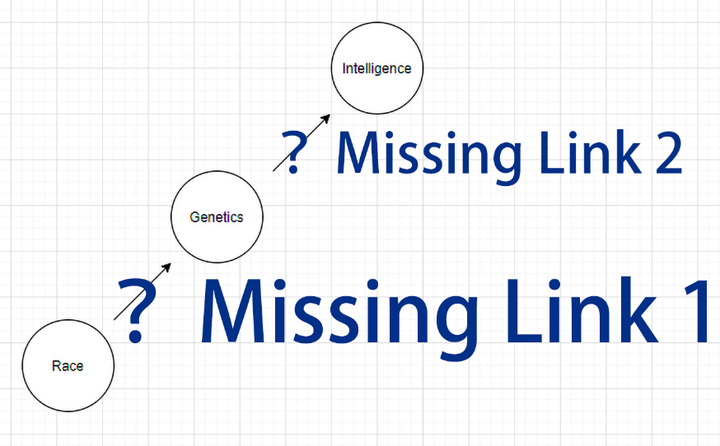
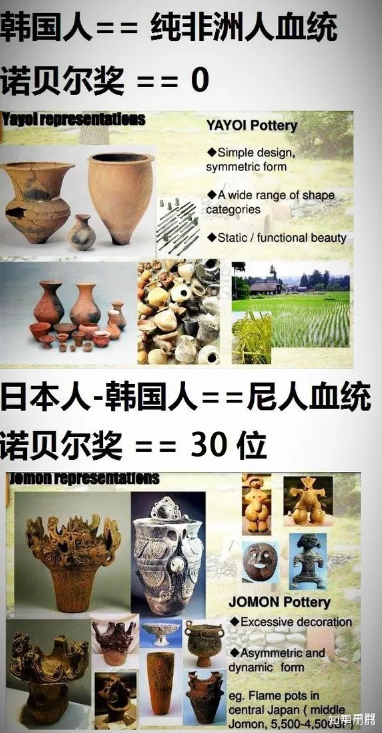
The Japanese genomic structure is characterized by dual origins, resulting from the admixture of continental East Asians—classified as Neo-Mongoloid (新モンゴロイド)—and the indigenous Jōmon hunter-gatherers, who represent the Proto-Mongoloid (古モンゴロイド) lineage. As the principal genetic differentiator between Korean and Japanese populations is the presence of this Proto-Mongoloid ancestry, the application of John Stuart Mill’s Method of Difference suggests that this specific component constitutes the critical variable driving observed intellectual distinctions.
Indeed, analyses by Baidu Genetics (百du遗传) provided initial empirical support for this hypothesis, demonstrating significant divergence in intellectual metrics between Korea and Japan—populations that are otherwise comparable across most control variables, barring the Jōmon component. A modern phenotypic trait linked to this ancestral lineage is elevated body mass index (BMI), implying a correlation where higher cognitive capacity entails increased BMI relative to mainland Neo-Mongoloid populations (Nat Commun. 2024;15:9780. doi:10.1038/s41467-024-54052-0).
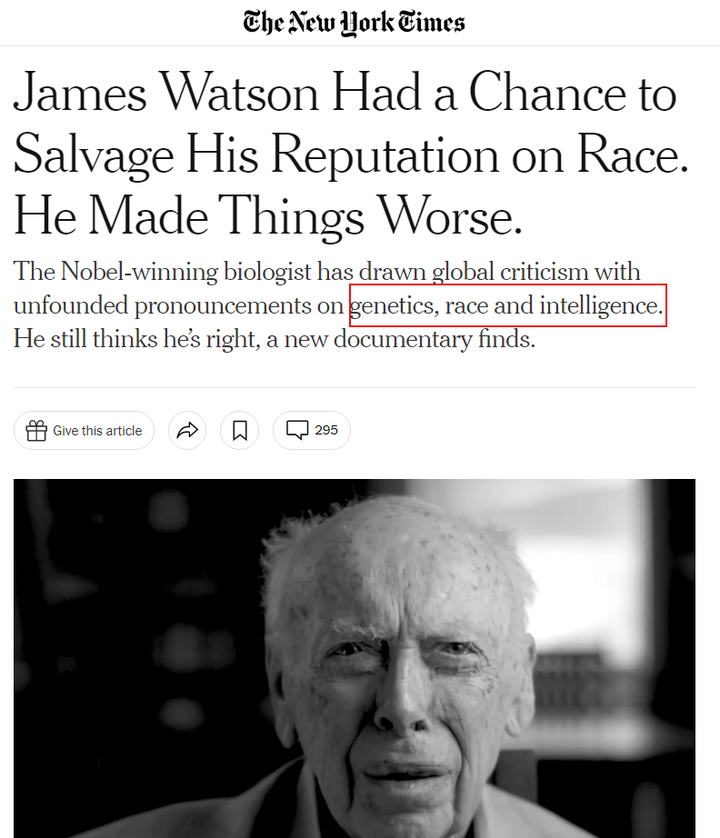
This reasoning can be extended to other controversial claims, such as James Watson’s statement: “There’s a difference on average between blacks and whites in IQ tests. I would say the difference is genetic.” Such perspectives have gained renewed attention following the 2022 Nobel Prize in Physiology or Medicine, awarded for breakthroughs in ancient DNA research.
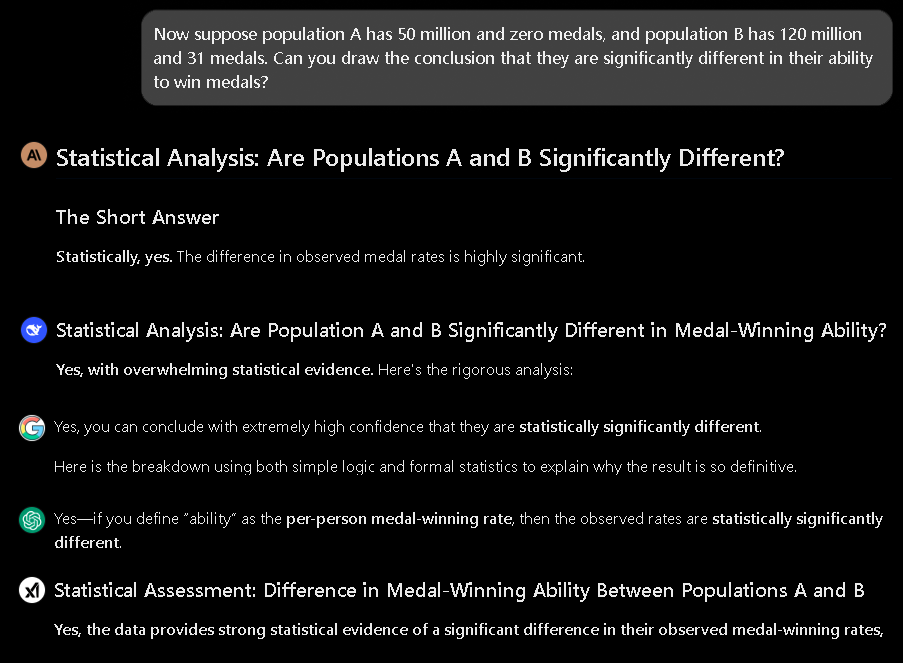
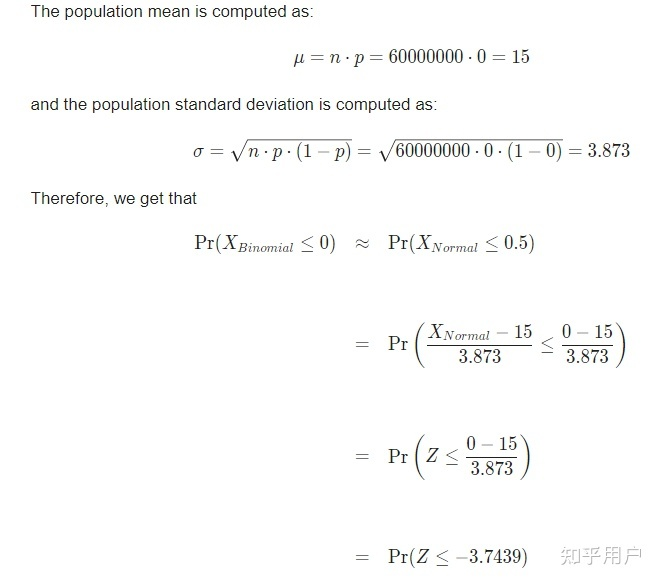
In 2025, computational replications across major AI platforms corroborated the Baidu Genetics( 百du遗传) findings, consistently maintaining a Z-score > 4 (closely tracking the original 3.74 figure). This indicates a substantial and statistically significant disparity attributable to the ancient Proto-Mongoloid component. Consequently, this framework suggests that older genetic lineages may possess intellectual profiles that more closely approximate divine potential.
This article challenges the conventional narrative surrounding Putonghua (Mandarin Chinese), the official national language of China, by arguing that it originated not from authentic Han Chinese traditions but from the imperfect, “broken” Chinese spoken by Manchu rulers and earlier nomadic conquerors (including Mongols, Xianbei, and Jurchens) during their domination of northern China.Drawing on historical records—such as Matteo Ricci’s late Ming-era descriptions of Beijing speech—and linguistic analysis, the author contends that Mandarin evolved from the rudimentary imitation of Han Chinese by Altaic-speaking elites in Beijing’s inner city under Qing rule. This “Manchu-style Chinese” featured phonetic simplifications (e.g., loss of entering tones leading to increased homophones), limited vocabulary, and awkward pronunciation, reflecting the linguistic limitations of its non-native speakers.In contrast, southern Chinese dialects are presented as preserving more authentic elements of classical Han speech, while northern varieties, including modern Mandarin, bear traces of “Hu” (foreign nomadic) influences. The standardization of this form as the national language is attributed to political power rather than inherent superiority, solidified through Qing administration, republican policies, and constitutional mandates.Ultimately, the piece posits that Putonghua represents a historically imposed “ruling class dialect” rooted in ethnic fusion and conquest, rather than a pure continuation of Beijing or Han linguistic heritage.
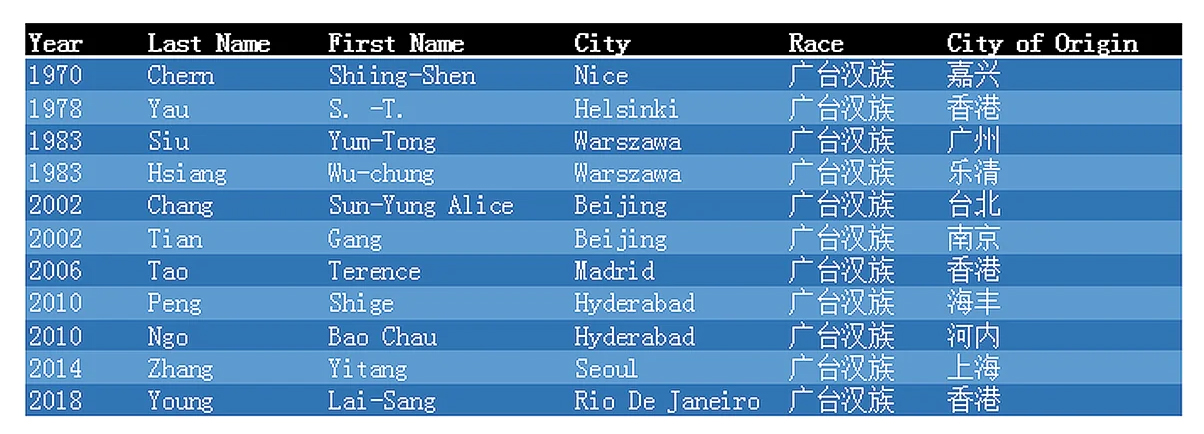
This adapted list, drawn from the official website of the International Congress of Mathematicians (ICM), highlights internationally recognized Chinese mathematicians who have been invited at least once as plenary speakers. It reveals that all of them hail from southern China, with those from the far south accounting for approximately 80%.
This compilation was collaboratively prepared by myself and several fellow scholars on an online forum, drawing on data from more than 15 years ago. The official website of the Chinese Academy of Sciences organizes its academicians into academic divisions, with Mathematics and Physics combined under a single Division of Mathematics and Physics—a structure that persists to this day. Without the expertise and contributions of professors who were actively engaged in mathematical research during that era, the list would inevitably lack accuracy and reliability.It reveals that the number of accomplished mathematicians from northern China is significantly fewer than those from the south, even though academic resources and facilities have been heavily concentrated in the north since 1949.